The Milwaukee area has been under a steady run of severe thunderstorm warnings this year, from Milwaukee and Ozaukee counties in the spring to Waukesha, Racine, Kenosha, and Walworth counties more recently, with hail reports mixed in along the way. Most homeowners never think about their roof until a storm passes overhead. Here's how to actually check it afterward, without getting up on a ladder.
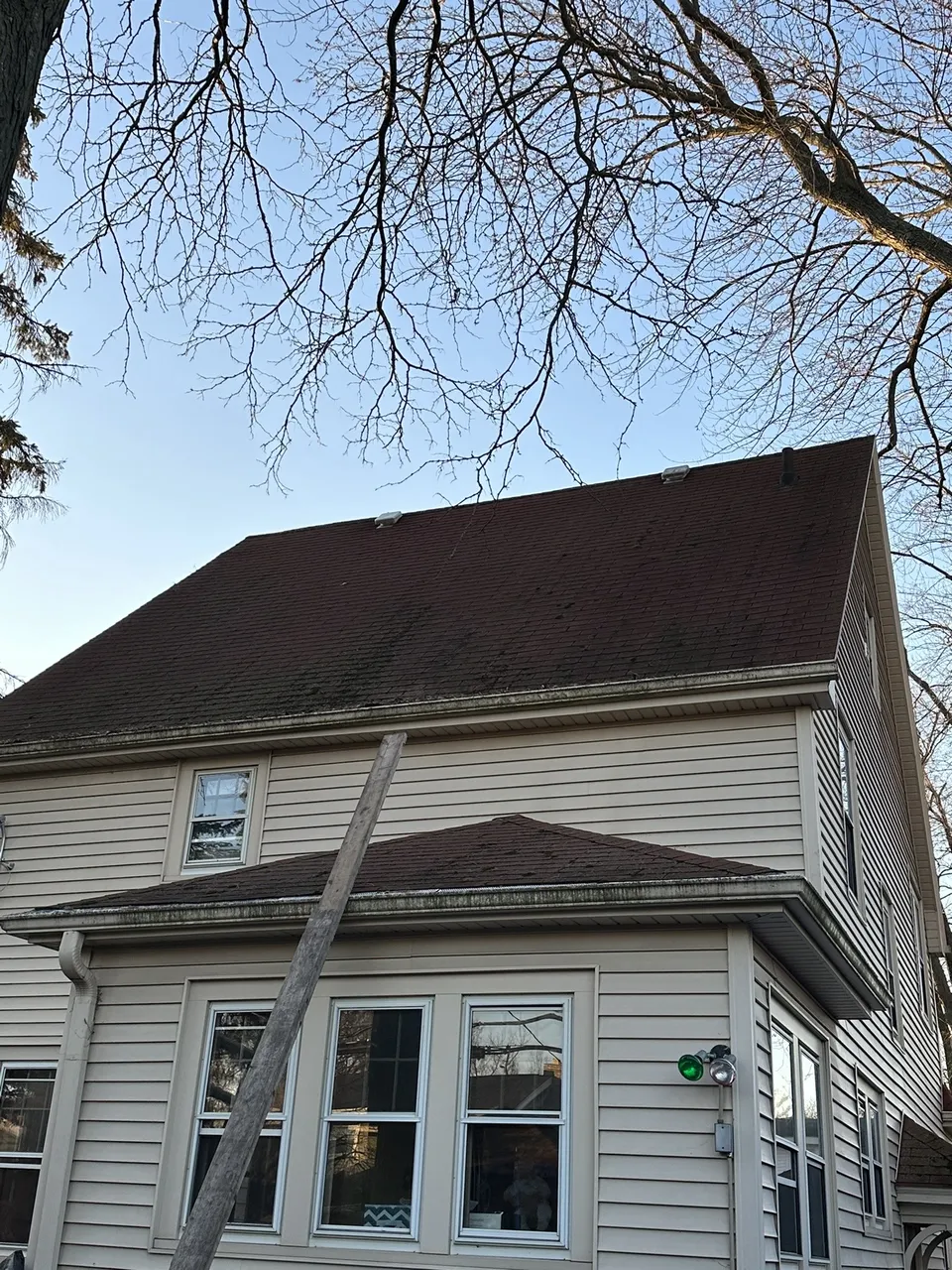
Why storm damage is easy to miss
Hail doesn't have to be baseball-sized to cause real damage. Even penny- or quarter-sized hail — which is what's been reported around Milwaukee this year — can bruise shingles hard enough to shorten their lifespan by years, without leaving an obvious hole. Wind does something similar: it can lift the edge of a shingle just enough to break its seal, and the shingle can lay back down looking mostly normal until the next rain gets underneath it.
That's the tricky part. The damage that actually costs you money — a slow leak, premature shingle failure, water working into the decking — is rarely visible from the driveway. It shows up months later as a stain on your ceiling.
What to check after a storm (from the ground)
You don't need to get on the roof to do a first pass. Grab a pair of binoculars and walk the perimeter of your house, along with these spots:
- Gutters and downspouts. Granules from asphalt shingles washing into your gutters after a storm is one of the earliest signs of hail bruising.
- Metal vents, flashing, and your AC unit. Soft metal dents easily in hail and is often a clearer sign of hail size and impact than the shingles themselves.
- Shingle edges and ridge lines. Look for shingles that appear lifted, curled, or out of alignment with the rest of the roof.
- Siding and window screens. Dented or split siding, especially on the side of the house that faced the storm, usually means the roof took a similar hit.
- Your yard. Broken branches and shredded leaves are a rough indicator of how much force came down — useful context even before you look at the roof.
Signs that mean it's time to call a professional
Some signs are clear enough to act on immediately, even from the ground:
- A active leak or water stain on a ceiling or interior wall
- Visibly missing shingles, or shingles you can see are cracked or torn
- Exposed roof decking or felt paper anywhere on the roof
- Sagging anywhere along the roofline
- A neighbor's roof getting worked on or replaced after the same storm — a good sign your area was hit hard enough to be worth checking
If you see any of these, or you're just not sure, the safe move is a professional inspection rather than climbing up yourself. Wet, hail-damaged shingles are slick and can hide soft spots in the decking underneath.
Had a bad storm come through recently?
We'll come out, get on the roof, and show you photos of exactly what's going on — free, no pressure.
What to do if you find damage
- Take photos from the ground of anything that looks off — dented gutters, granules, missing shingles. Date-stamped photos help if you end up filing an insurance claim.
- Call for a free inspection. We'll check the roof directly, document what we find with photos, and give you a written report — whether or not you end up working with us.
- File a claim if it's warranted. If the damage is storm-related, most Wisconsin homeowners policies cover it. We can help document the damage in a way your adjuster can act on quickly.
This is exactly the kind of work we handle every storm season — see our full list of roofing and exterior services, including storm and hail damage assessments and insurance claim help.