Milwaukee has had a rough couple of years with flooding — from the historic rainfall that overwhelmed the city's storm sewers and sent the Milwaukee River to a record crest, to more flooded streets and basements this spring. A city task force is now working on flood mitigation citywide. None of that is something a roofer fixes. But your gutters and roof drainage are one part of the flooding picture that is on you, and one of the cheapest things to get right.
How your roof and gutters connect to basement flooding
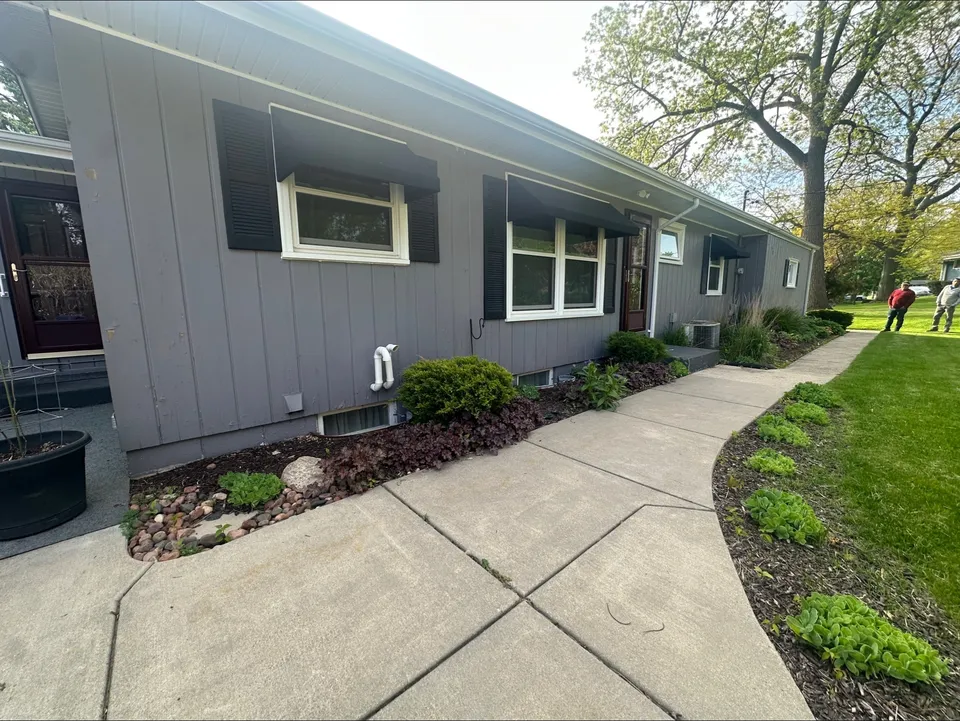
Every drop of rain that lands on your roof has to go somewhere. In a well-functioning system, it's channeled into gutters, down through downspouts, and out several feet away from your foundation. When any part of that chain breaks down — clogged gutters, a downspout dumping water right next to the house, a gutter that's pulled away from the fascia — water ends up pooling right against your foundation instead. During the kind of short, intense downpours Milwaukee has seen recently, that's often enough to push water into a basement even before the city's storm sewers are anywhere close to overwhelmed.
It's not the whole story — citywide sewer capacity during a historic rain event is a separate problem no homeowner can fix on their own — but it's the part that's actually within your control, and it's usually the cheapest one to fix.
What to check before the next heavy rain
- Are your gutters actually clear? Standing water or plant growth in a gutter after a dry stretch means it's not draining properly.
- Do your downspouts extend away from the house? A downspout that ends right at the foundation is doing the opposite of its job. Extensions that carry water 4–6 feet away make a real difference.
- Is the ground graded away from your house? Even perfect gutters can't help if the soil around your foundation slopes toward it instead of away.
- Are there any sagging or separated gutter sections? A gutter pulling away from the fascia board often means the fascia itself is starting to rot from trapped moisture — worth catching early.
- During a storm, where does water actually go? If you can safely watch from a window during a heavy rain, overflow points become obvious fast.
Not sure if your gutters are part of the problem?
We install, repair, and clean gutters across the Milwaukee area — including gutter guards if you're tired of climbing a ladder every fall.
Seamless gutters vs. sectional gutters
If your gutters are original to an older home, there's a decent chance they're sectional — built from shorter pieces joined together, each seam a potential leak point. Seamless gutters, formed on-site to match your roofline exactly, cut that failure point out almost entirely. For a lot of Milwaukee-area homes dealing with more intense rain events than they were built for, upgrading old sectional gutters to seamless is one of the more cost-effective exterior improvements available.
When it's a roof problem, not just a gutter problem
Sometimes what looks like a gutter issue is actually the roof itself sending water somewhere it shouldn't. Damaged or missing flashing around chimneys and roof valleys, worn shingles, or improperly pitched sections can dump water in unexpected spots that no amount of gutter maintenance will fix. If you've checked the gutters and the drainage still doesn't add up, that's worth a full roof inspection — see our guide on signs your roof needs repair for what to look for.