Most homeowners think about their roof, and stop there. But the roof is really just one piece of a bigger system — siding, windows, gutters, paint, and even the concrete around your house all work together to keep water out and your home holding up through Wisconsin winters. Here's a walk-around checklist for the rest of the exterior.
The walk-around checklist
Siding
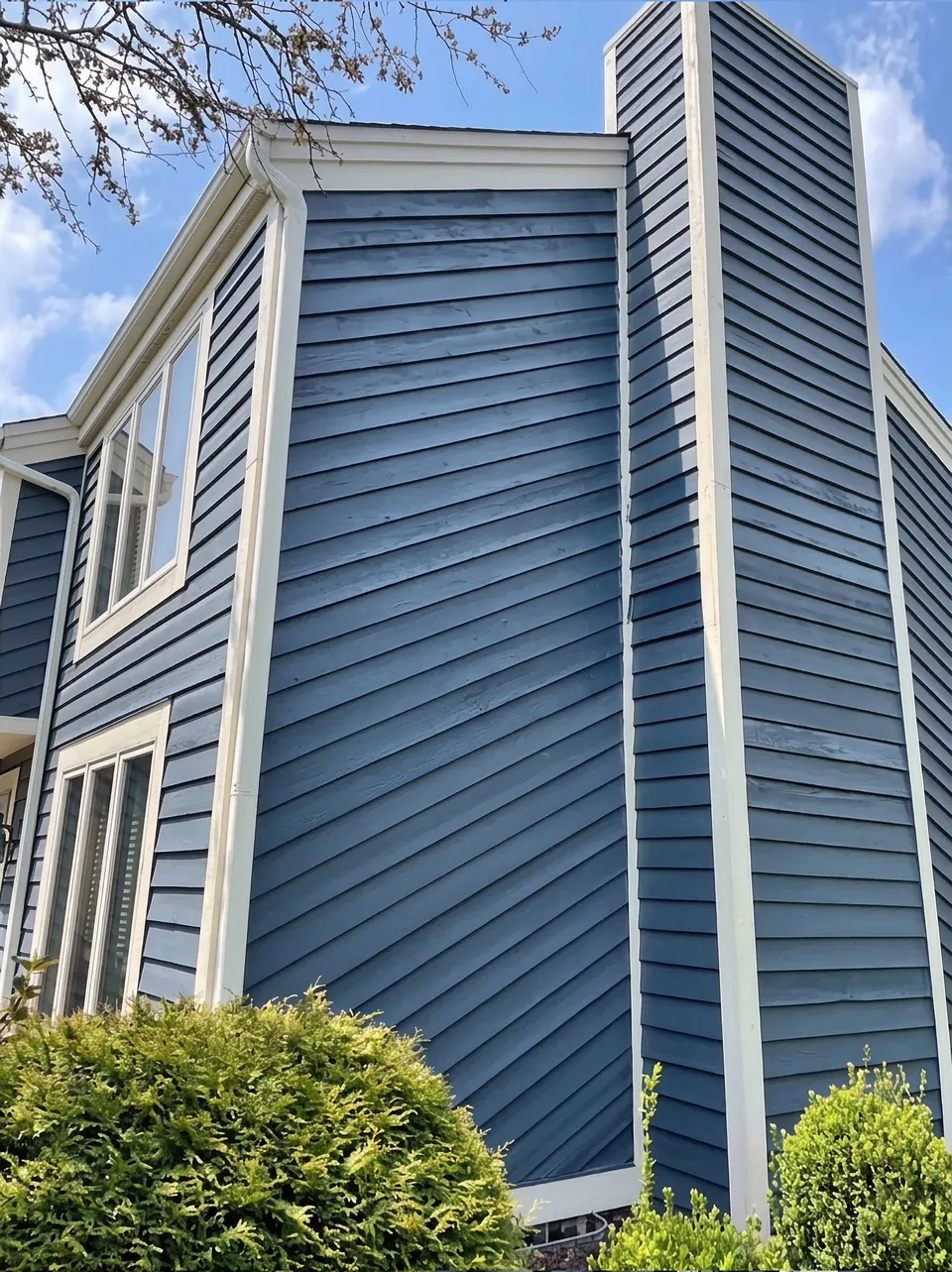
Look for cracking, warping, or fading, and check anywhere siding meets a window, door, or the foundation for gaps. Vinyl, LP, and cedar siding all fail differently, but any of them letting water behind the wall is a problem worth catching early.
Windows
Drafts, fogging between panes, or difficulty opening and closing usually mean the seal has failed. Poorly sealed or flashed windows are also a common, easy-to-miss source of water intrusion around the frame.
Gutters, soffit & fascia
Covered in more detail in our flooding and drainage guide — but as a quick check, look for sagging gutters, granule buildup, and any soffit or fascia board that looks soft or discolored.
Exterior paint & cedar staining
Peeling or chalky paint isn't just cosmetic — it means the wood underneath has lost its protective layer and is exposed to moisture. Cedar siding in particular needs to be restained periodically to hold up.
Concrete patios & walkways
Cracked or heaving concrete isn't just a trip hazard — it's often a sign of drainage issues nearby, the same water management problem that shows up as basement flooding or foundation wear.
Attic insulation & ventilation
Poor attic insulation and ventilation cause ice dams in winter and push your energy bills up year-round. It's invisible from the outside, but it affects how long your roof and siding actually last.
Not sure where to start?
We handle the whole outside of the house — one crew, one point of contact, start to finish.
Why one crew for the whole exterior makes sense
Roofing, siding, gutters, and paint all interact — a leak that starts at a roof valley can show up as siding damage two feet away, and a poorly flashed window can be mistaken for a roofing issue. Handling the exterior as one connected system, rather than hiring separate contractors for each piece, usually means fewer things fall through the cracks between trades, and no one pointing fingers at "someone else's work" if something goes wrong later.